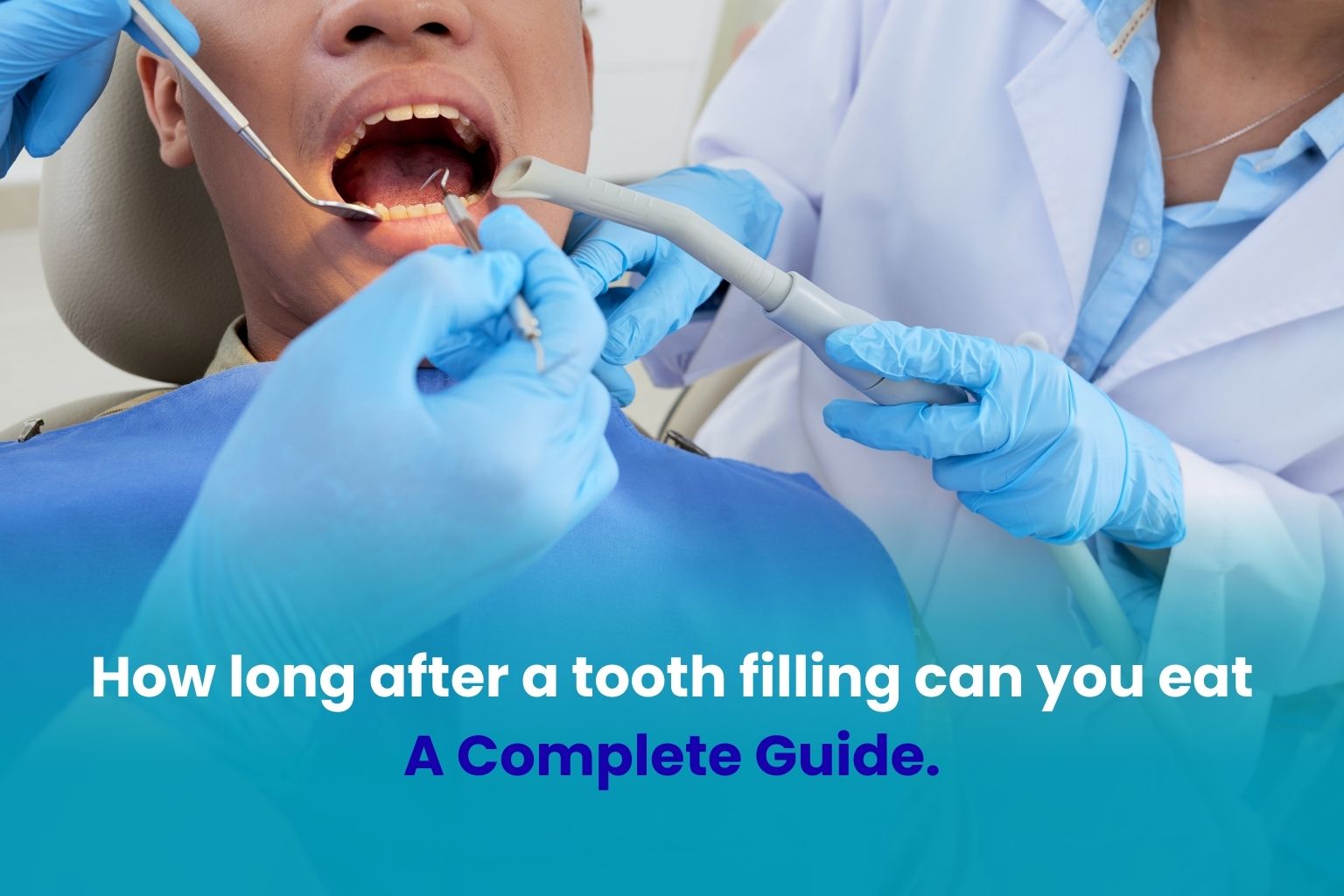
If you just got a tooth filling recently, the first question that arises is, “How long after a tooth filling can you eat?” The answer depends on the specific type of dental filling. The dentist uses different types of fillings, which determine when you can resume normal chewing activities. White (composite) fillings harden right away, but silver (amalgam) fillings need 24 hours to complete their setting process which requires you to wait additional time before normal chewing activities.
Can You Eat Immediately After a Filling
There is a possibility that the tooth might feel sensitive after the dental fillings especially after a few hours or days. Consumption of incorrect food might lead to pain or break the new filling. To maintain the safety of your tooth, you should not eat such kind of food, and, particularly, the first 24 hours. It typically depends on the type of fillings done.
Types of Tooth Fillings and Eating Guidelines
Composite (White) Fillings
On being subjected to a special light, these are hardened immediately. However, one should not eat immediately, and it is better to wait when the numbness has decreased normally it may take 1-3 hours, and in this way, you do not bite your tongue or cheeks.
Amalgam (Silver) Fillings
These have a long time to settle. Do not chew on that side at least within a period of 24 hours. The numbness may be overcome and soft foods can then be consumed.
Glass Ionomer Fillings
They are less hard and they are commonly applied to small cavities. Take 1-2 hours before eating and do not eat hard or sticky foods in a day.
Temporary Fillings
These are not very strong. Wait approximately 1 hour prior to taking a meal and do not chew on that side.
Importance of Waiting Before Eating
It is essential to wait before you start eating, as your mouth must require some time to adapt to the new filling. When the tooth filling is sensitive, premature chewing can lead to major consequences. You might end up hurting yourself when you have a numb mouth. Moreover, the new filling can also be subjected to pressure caused by chewing unless you are keen. Taking your tooth a minute off is a natural way of avoiding pain, and it is also a natural way of avoiding untold stress to the dental restoration.
Post-Filling Care Instructions
Proper care of your tooth aids recovery and less sensitivity of the tooth after a tooth filling. These are the simple steps that you should follow:
Simple Care Tips
- Wait until filling returns to normal before you start eating.
- Take water to make your mouth clean.
- On the first day, chew on the other side, provided that it is possible.
- Contact your dentist in case your bite is uneven.
- Wipe the area treated with a brush.
- These are the steps that can be taken to avoid discomfort and keep your filling lasting longer.
You should also not do some things that will damage your teeth. Any hard foodstuffs example ice and nuts, should not be eaten by chewing directly. Sticky candies, which can stick to the tooth and will damage the filling, must be avoided. Resist grinding teeth or putting excessive pressure to the affected side. You should also avoid re-examining the filling with your tongue even when it seems that it is different initially. One should not smoke right after the procedure as it slows down healing and stains white fillings.
Recommended Foods After a Tooth Filling
The correct choice of foods simplifies the process of recovery. The majority of the time, it is best to take soft food, particularly within the initial 24 hours.
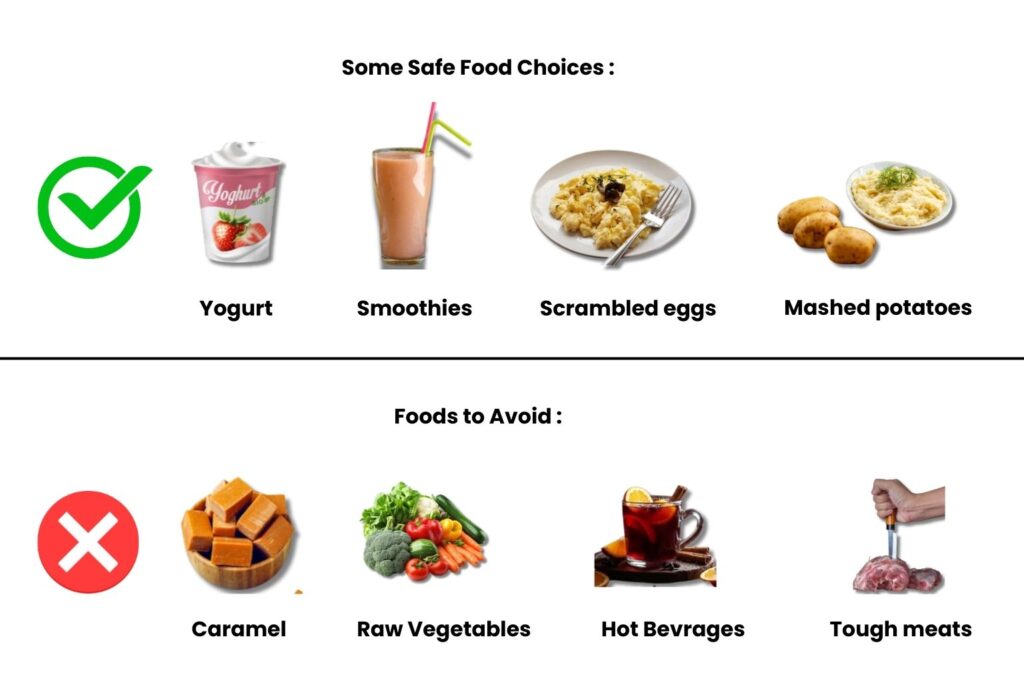
Safe Food Choices
- Yogurt
- Mashed potatoes
- Scrambled eggs
- Soft rice
- Smoothies
- Warm soup (not too hot)
Such foods are less chewing-intensive and put less pressure on the occupied tooth. When your tooth is sensitive or have dental filling, then avoid very hot or cold foods, and choose instead to consume foods at room temperature.
Foods to Avoid After a Tooth Filling
Other foods may produce pain and even harm the new filling. One should avoid.
- Hard food: Chips, hard candy, popcorn, or tough meats & jerky.
- Sticky food: Caramel and chewing gum could pull the filling and make it weak.
- Drinks: Avoid drinks that are very hot as they can raise the sensitivity, particularly in the initial days.
- Raw vegetables: Carrots, Broccoli, Cauliflower, etc.
Sweet and sour foods are also to be minimized since they make one susceptible to tooth decay in the future. Eating healthy foods helps to maintain oral health and keep your filling healthy.
Tooth Sensitivity After a Filling
Yes, indifferent pain or sensitivity is typical. You can experience pain during biting or when taking sweet, cold, and hot food. This normally goes away in a matter of a few days or weeks. Assuming that the pain is sharp or fails to disappear, the filling can be slightly adjusted. Visit your dentist if the pain is more severe. Timely treatment avoids larger issues and maintains your tooth’s health.
Safe Brushing Practices After a Filling
You are free to brush your teeth on the same day, though you should be careful around the treated area. Make use of a soft-bristled toothbrush and do not use much power. Brushing will aid in the elimination of bacteria and prevent infection. Flossing can also be performed; however, it should be done in a gentle manner so as to prevent the floss from pricking the filling. Good oral hygiene maintains your dental fillings and teeth in good condition.
Drinking Water After a Filling
Yet, there is no such rule, nor is it even harmful, in drinking water. Water cleanses your mouth and gets rid of the food. In case your mouth is still numb, take it slowly, or else you will bite your lip or spill everything. The safest one after treatment is room-temperature water. Do not be too hot with drinks until all the sensation comes back to your mouth.
Avoiding Smoking After a Filling.
Smoking should not be used immediately since it retards healing and can lead to infection. White composite fillings can also be stained by it. The chemicals present in cigarettes slow down blood flow to the gums, and this may retard recovery. Also, it is recommended that at least 24 hours should pass between smoking and healing, as well as dental outcomes.
Conclusion
Being aware of what to do in case of tooth filling will enable you to get back on your feet comfortably and safely. The majority of the victims are able to eat after numbness disappears but initially, soft foods are preferable. Hard, sticky, and very hot food should be avoided for at least one day. Mild sensitivity is non-pathological and tends to resolve itself over time. Brush, take water and be careful about what your dentist tells you to do. In order to keep your restoration strong and to protect your smile for many years proper care after a tooth filling is necessary.