
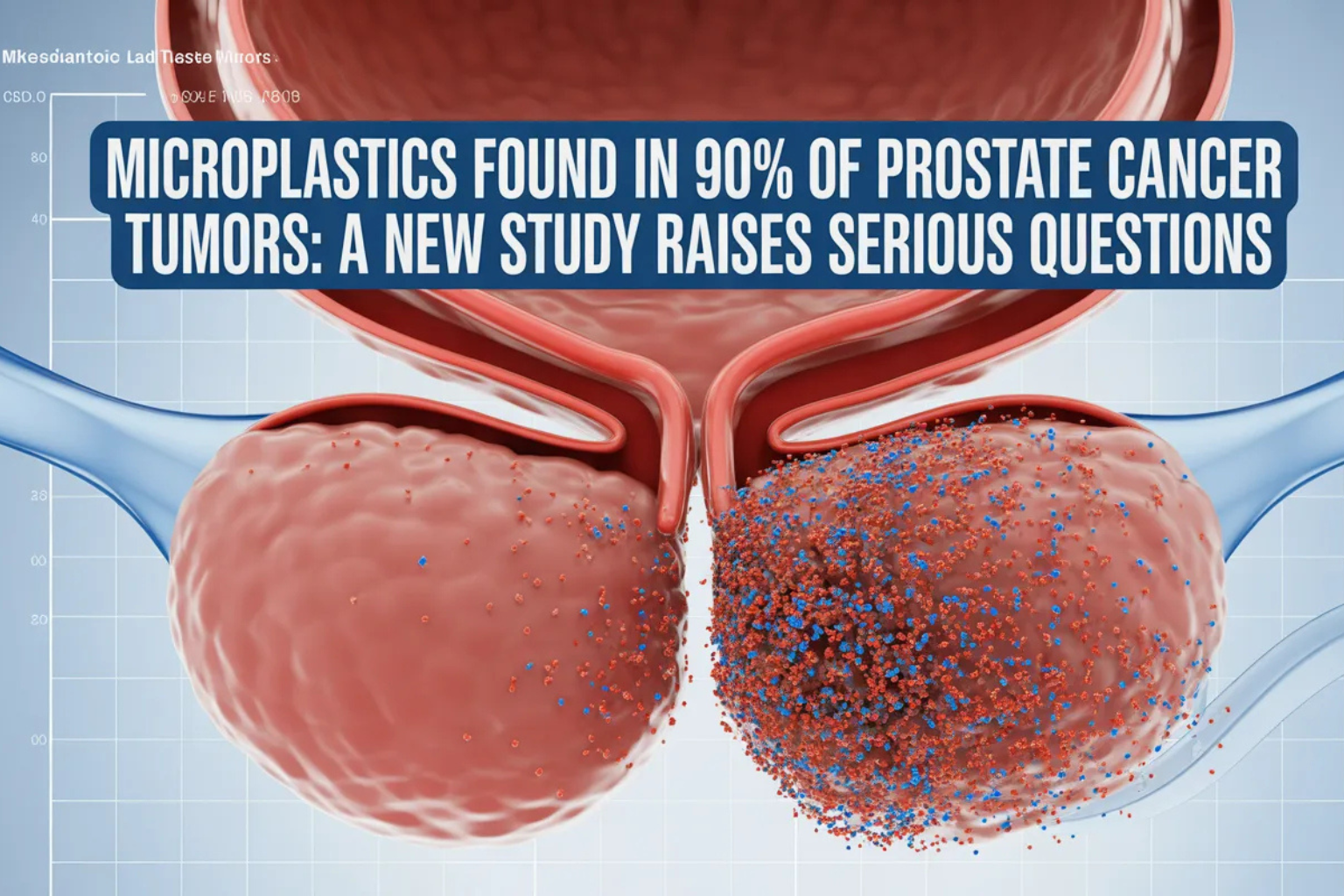
In a little but meaningful new study, microplastics, microscopic-sized fragments of plastic, which have pervaded almost all corners of the environment, were found in 90 percent of prostate cancer tumors studied by researchers. Recently, the research has been introduced at one of the largest conferences of oncologists and was covered by such media outlets as The Hill, NBC News, and SciTechDaily, which has led to a new debate regarding the potential harmfulness of plastic pollution and its potential contribution to the development of the cancer conditions.
What Are Microplastics – and Why Do We Care?
Microplastics are microscopic fragments of plastic which are typically less than five millimeters in size; they are the byproducts of the breakdown of larger pieces of plastic which are used in daily products like food packaging, cosmetics, clothing, and industrial products. These plastics break down over time as a result of heat, wear and exposure to chemicals thus releasing minute cogs that may be ingested by people through food, inhaled on air and through skin contact.
The microplastics have been detected by the scientists in all types of human tissues and body fluids, such as blood, lungs, stool and even placenta. But until recently, their presence in cancerous prostate tissue remained unregistered in the West in any clear form.
The Study: What Researchers Found
The study was carried out by a group at the NYU Langone Health, comprising its Perlmutter Cancer Center and Center of the Investigation of Environmental Hazards. The researchers had taken samples of prostate tissues of 10 men who were having their surgeries done to treat prostate cancer. They compared the tissue of two cancerous tumors and the benign (noncancerous) tissues of the same prostates in terms of the amount of plastic in each of them.
The presence of microplastic particles was detected in 90 percent of tumor tissue samples that were obtained in men with prostate cancer.
Additionally, 70% of benign prostate tissue samples contained microplastics.
Tumor tissue was found to have approximately 2.5 times of plastic or approximately 40 micrograms of plastic per gram of tissue in tumor tissue on average as compared to approximately 16 micrograms per gram of surrounding healthy tissue.
These findings imply that it is not only that microplastics exist in prostate tumors but also that they are found in much higher amounts in the cancerous tissue compared to the healthy tissue.
How can Scientists Prevent Contamination?
A disadvantage in microplastic research in human tissues is that it is difficult to eliminate the possibility of contamination with plastic devices that may be used in laboratories or even during the operation. To deal with this, scientists substituted regular plastic instruments with metal, cotton or other non-plastic material in the collection and processing of samples. They further had all testing done under special controlled clean rooms which would reduce external contamination.
This additional precaution enhances the validity of their findings and researchers indicate that tumor and benign samples of tissues were treated exactly in the same manner, but the tumors exhibited much higher plastic concentrations.
Microplastics and Cancer: There is a Correlation, but no Cause
Although the prevalence of microplastics in prostate tumors is high, scientists are keen not to say that the particles cause cancer directly. The research was small and exploratory, it is necessary to do further research before you could verify the presence of a causal relationship.
The study was led by the professor, Dr. Stacy Loeb, of the Urology and Population Health departments of NYU Grossman School of Medicine, who highlighted that it is premature data. She informed NBC News that though it was surprising and concerning that more of the plastics were found in the tumor tissue, the research did not show that microplastics cause prostate cancer.
Nevertheless, the results pose a significant question as to whether chronic exposure to microplastics may be one of the causes of cancer. One of the hypotheses is that plastic particles can induce chronic inflammation, which is well-known to favor genetic alterations and tumor growth over the years.
There is also a risk that microplastics contain numerous types of chemical additives, including phthalates and bisphenols, which have been considered risk factors and causes of cancer in the past. The additives have a potential to become carriers, introducing dangerous chemicals to tissues and affecting cell behavior.
Big Public Health impact
Prostate cancer is one of the worst cancers among men and is also common to men all over the world. According to the Centers of Disease Control and Prevention, in the US, one male in eight will be diagnosed with prostate cancer sometime during his or her life.
The fact that microplastics are also present in tumors poses an additional concern to the current debates regarding the issue of environmental pollution and human health risks. In addition to causing heart disease, lung conditions, and immune system disturbance, other health problems are already associated with microplastics in animal studies and scarce human research.
Although it is quite premature to create conclusive links between microplastics and cancer, the results suggest that more stringent regulatory action should be placed toward minimizing plastic pollution and reducing the number of human beings in contact with small plastic particles.
Next Steps in Research
The authors of the prostate tumor study claim that they intend to develop their investigation. Future research may involve:
Extensive sample sizes of patients to establish these preliminary conclusions.
Contrasting microplastic in prostate cancer of various types or stages.
Researching the behavior of the various types of microplastics within the body.
Developing pathways which may be associated with the relationship between plastic exposure and cancer.
More studies are also demanded by other scientists to recreate those findings in various populations and employ alternative methods of detection in order to confirm the importance of microplastics in human tissues further.
- The authors of the prostate tumor study claim that they intend to develop their investigation. Future research may involve:
- Extensive sample sizes of patients to establish these preliminary conclusions.
- Contrasting microplastic in prostate cancer of various types or stages.
- Researching the behavior of the various types of microplastics within the body.
- Developing pathways which may be associated with the relationship between plastic exposure and cancer.
- More studies are also demanded by other scientists to recreate those findings in various populations and employ alternative methods of detection in order to confirm the importance of microplastics in human tissues further.
What You Can Do to Lessen the Impact of Microplastic
Even though the studies are still underway, and concrete health recommendations are not drawn as yet, an everyday exposure to microplastics can be assumed to be a sensible measure to take.
Some steps include:
- Single use plastic bottles, bags and packaging are not used.
- Consuming fresh food as opposed to processed or packaged.
- Use of plastic containers should be avoided when heating food, particularly microwave heating.
- Promoting policies and products in order to minimize plastic waste.
- Living a life free of plastic would not only be beneficial to individual health, but also aid in the preservation of the environment, where the root of microplastics originates in the first place.
In a newer study of 90 percent of cancer tumors in the prostate, a microplastic was discovered, which adds additional urgency to the already growing research on the effects of environmental pollutants on the health of humans. Though this study has not verified that microplastics cause prostate cancer, it has brought into the limelight the fact that plastic pollution has gotten into the depths of the human body and scientists are putting pressure on people to dig deeper.
The role of microplastics in human disease is a scientific frontier, which is yet to be developed, and has profound implications on three key aspects of human health, environmental policy, and life overall. In the meantime, both individuals and policy makers might have to consider a way in which plastic is used, regulated and managed in our world.