
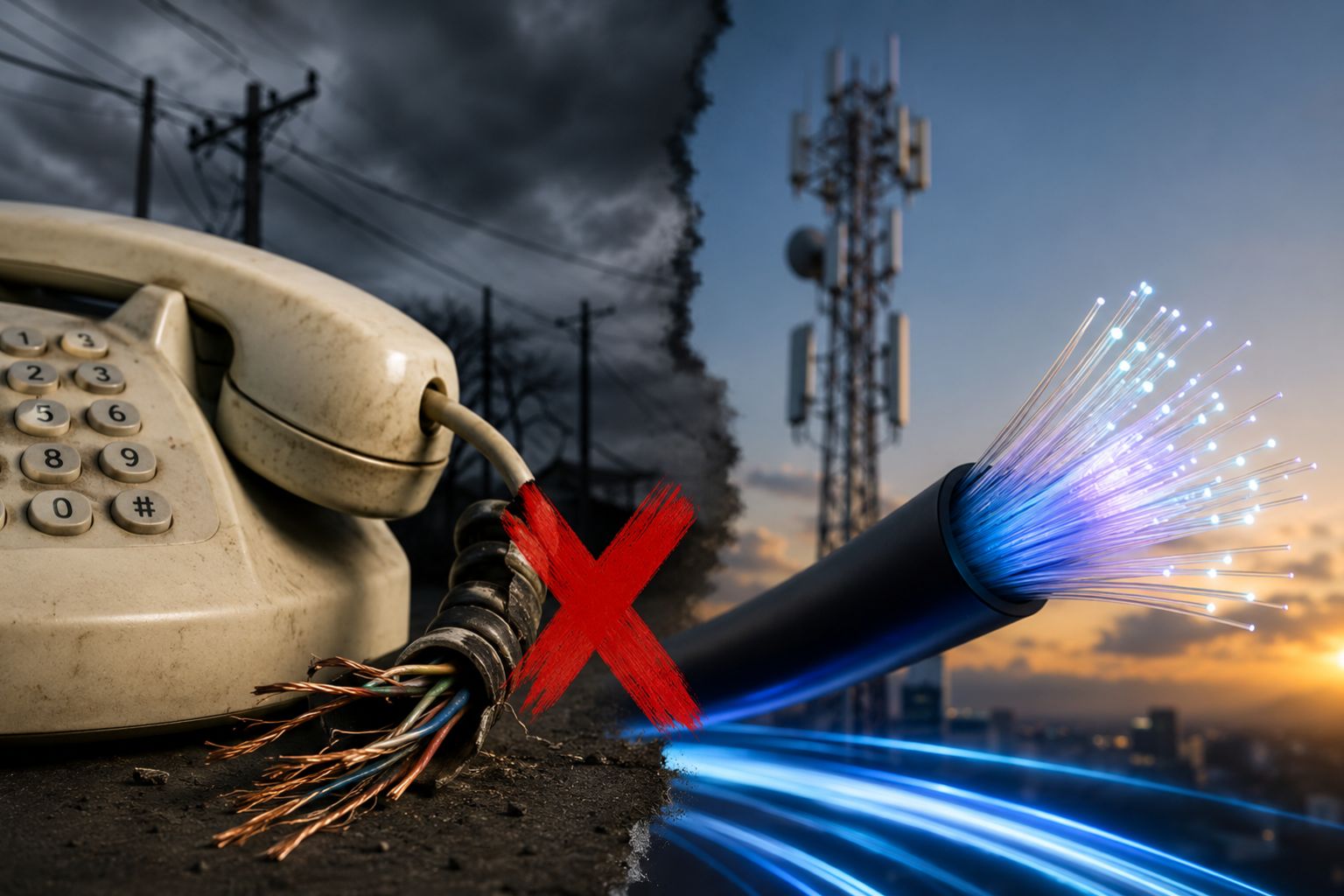
Copper landline shutdown is closer than you think. Learn what it means for elderly users, rural areas, and your home phone service. Don’t wait — read now!
You pick up your home phone and dial a number — just like you have done for years. It feels normal. It feels reliable. But behind the scenes, the copper landline shutdown is already underway across the United States.
Most people have no idea. And that is exactly the problem.
What Exactly Is the Copper Landline Shutdown?
Old-fashioned wired telephone service utilized copper lines laid underground as well as overhead. This kind of telephone service is referred to as POTS, an acronym for “Plain Old Telephone Service”. It is simple, dependable, and has existed for more than one century.
Copper line decommissioning refers to the act of shutting down the old copper line network and upgrading to more modern infrastructure, mostly fiber optics and wireless technologies. Telecom companies say the old copper system is expensive to maintain and not many people use it anymore. They want to move on. The question is — what happens to the people who still depend on it?
Why Is This Happening Right Now?
Maintaining copper networks costs a massive amount of money each year. The old system serves only a tiny fraction of total phone customers today — roughly 3 to 5 percent. Yet the upkeep runs into billions of dollars annually.
The Federal Communications Commission — the FCC — has already given approval for major telecom providers to start retiring copper in most US states. By January 2026, approval was granted to shut down more than 30 percent of the copper network footprint across 18 states. However, in March 2026, the FCC took steps further by implementing new rules that aimed at expediting the process of decommissioning.
The idea is very clear – move away from copper cables and adopt modern means like fiber optic and wireless connections.
The Copper Landline Shutdown and Who It Affects Most
This is not just a technical issue. For millions of Americans, this is deeply personal.
Elderly people are at the front of this conversation. As of mid-2024, half of Americans over the age of 65 still had a landline at home. Many of them are not comfortable with smartphones. Many do not want to switch. And many rely on their landline phone as a direct lifeline — especially in an emergency.
Rural communities face a different problem. Fiber internet is not available everywhere yet. Mobile signals in remote areas can be weak or unreliable. The copper landline shutdown could leave some rural households with no solid phone option at all during the transition period.
People with medical devices are also deeply affected. Home security alarms, medical alert buttons, and health monitoring equipment often run through copper phone lines. If those lines go away without a proper replacement, some of the most vulnerable people could lose a critical safety net.
Low-income households are another concern. Switching to fiber or a wireless alternative may cost more. Not everyone can afford that jump easily.
What Happens to Your Phone Service After the Switch?
Telecom companies are not just pulling the plug and walking away. Replacement services are being offered. One option being rolled out is called Phone-Advanced — a service that works over fiber or wireless networks and supports regular phones, fax machines, home alarms, and medical monitoring devices.
Some providers are offering this service free for the first three months to existing landline customers as they transition.
But there is a real concern many people raise. Traditional copper landlines work even during a power cut — because the copper wire itself carries a small electrical current. The new wireless and fiber alternatives need a router and power to function. If the power goes out during a storm or disaster, your new phone might go silent exactly when you need it most.
Battery backups can help — but they are not always included by default, and they only last so long.
Consumer advocacy groups have raised specific concerns about wireless signal congestion during emergencies. When many people try to call 911 at the same time on a shared wireless network, signals can get jammed. A copper wire does not have that problem.
What California Is Doing Differently
While most US states have accepted the copper phase-out, California stood firm. The state has something called a Carrier of Last Resort law. It requires telecom providers to offer basic phone service to anyone who requests it — no exceptions.
California regulators rejected a request to be released from that obligation. So the telecom provider filed a federal lawsuit in May 2026 against the California Public Utilities Commission and the state’s Attorney General. The company argued that state rules cannot override federal approval to retire copper networks.
In the meantime, the same company announced a plan to invest $19 billion in California between 2026 and 2030 — bringing fiber to over 4 million additional homes and building 1,200 new cell sites across the state. They also committed to hiring hundreds of technicians and opening six new digital learning centres in 2026.
The earliest possible date for California copper shutdowns to begin is June 1, 2027 — if the lawsuit succeeds.
Will the Replacement Actually Work for Everyone?
Who Might Struggle With the Copper Landline Shutdown Transition
The copper landline shutdown transition is not going to be smooth for everyone. Public interest groups have been vocal about this. They argue that wireless alternatives are not always a direct, equal replacement — especially for people in remote areas or for those using sensitive medical equipment.
The UK went through a similar process. Phone company BT tried to replace its old copper network with fiber across the country. After serious concerns were raised about elderly and vulnerable customers — particularly those using emergency alarm devices — the government stepped in and forced a delay. A formal charter was introduced to protect at-risk users before the switchover could continue.
The US does not yet have the same level of protection in place. That gap worries many advocates.
What Should You Do Right Now?
You do not need to wait for a shutdown notice to arrive before you start thinking about this.
- Find out if your area is already affected by checking with your phone provider directly.
- Ask what replacement service is available at your address — fiber, wireless, or something else.
- If you use a medical alert device, home alarm, or fax machine through your landline, ask specifically whether it will work with the new service.
- Check if you qualify for any free transition offers or discount programmes — some providers are offering deals for existing landline customers.
- If you are a caregiver for an elderly family member, have this conversation with them now — before they receive a confusing notice in the mail.
Key Dates You Should Not Miss
| October 2025 | New copper service installations effectively ended in most areas |
| January 2026 | Federal approval granted to shut down 30%+ of copper network across 18 states |
| March 2026 | FCC adopted new rules to further speed up copper retirement nationwide |
| June 2027 | Earliest possible date for California copper shutdowns to begin |
| 2029–2030 | Target date for full copper network retirement across most of the US |
Conclusion
The old copper phone network has served people faithfully for over a century. But it is being retired — and the timeline is moving faster than most people realise. The copper landline shutdown is not something happening in the distant future.It has already arrived in most of the states, and those lagging behind are being pressured into following suit.
Those who stand to lose the most are the ones who most depend on their landlines – seniors, people from rural areas, and those using medical equipment requiring a stable telephone link. These should be considered well in advance before unplugging the cable.
If you and/or your loved ones still use the old copper landlines, it is high time that you asked questions, understood what the options were, and were not taken by surprise when the move was made to your neck of the woods.