Millions of people wake up in the morning, but some people feel that their body is a bit stiffer than yesterday, and that is where you need self-care for Parkinson’s disease. Just a few regular habits can make a real difference in how you feel, move, and live. This guide covers everything, from what this condition actually is to stages, medication, and self-care.
What Is Parkinson’s Disease?
Quick Answer
Parkinson’s disease is a brain condition that makes it harder to move your body freely, smoothly and balanced. It happens when a certain nerve cell stops producing dopamine. It causes problems with movement, balance, and coordination between the human body and brain. It is not a harmful disease that can be contagious. It is noticed that it affects mostly people who are over 60, but it can appear earlier also. Yet no proper cure is available right now, but here are some precautions that people should follow if they get any symptoms.
In your brain exists a structure called the substantia nigra. Dopamine, which is a chemical substance, is produced in the substantia nigra. Dopamine facilitates smooth muscle activity. In the case of someone suffering from Parkinson’s disease, the nerve cells producing dopamine start to degenerate. With less dopamine being produced, your brain has difficulty sending appropriate instructions for body movement.
The result? Tremors, stiffness, and slowness that most people associate with the condition. But Parkinson’s is much more than shaking hands. It affects sleep, mood, digestion, and thinking too.
According to the Global Burden of Disease Study 2023, about 11.67 million people in the world had Parkinson’s disease as of 2023. Males suffer from it a little more often than females. The disease is normally diagnosed when the patient is 60 or older, but there are some cases that are early onset.
What Are the Symptoms of Parkinson’s Disease
There is a wide variation in symptoms from one individual to another. For some people, the first symptom is a small tremor in one hand. For others, it may be stiffness in the body in the morning.
Motor Symptoms
| Symptom | What It Looks Like | Common Side Affected First |
| Tremor | Rhythmic shaking, often at rest. Starts with one hand or finger. | One side of the body |
| Bradykinesia | Slowness of movement. Simple tasks like buttoning a shirt take longer. | Both sides over time |
| Muscle Rigidity | Stiff, tight muscles. Arms may not swing when walking. | Arms, legs, neck |
| Postural Instability | Difficulty balancing. The risk of falling increases. | Tends to appear in later stages |
Non-Motor Symptoms
These are often ignored but actually quite real. The non-motor symptoms may actually occur years prior to the motor symptoms:
- Loss of smell – anosmia – known symptom
- Constipation
- Digestive tract issues
- Sleep problems such as RBD
- Anxiety and depression
Fact derived from neurology studies: About 80% of individuals suffering from Parkinson’s disease have non-motor symptoms that affect their quality of life more than the motor symptoms do. Reference: PMC, BMJ Open 2025
Is Parkinson’s Disease Hereditary?
Quick Answer
Parkinson’s disease may not necessarily be hereditary in nature. There is only about a 15% prevalence of a family history among patients with Parkinson’s. Mutations of the genes LRRK2, SNCA, PINK1, and PRKN lead to the hereditary form of the illness. For the other 85%, the cause of their developing this disease lies in environmental and genetic elements.
This is the truth: a majority of people who get Parkinson’s disease have no previous history of it among family members. This is evident according to findings by the Parkinson’s Foundation.
That said, certain gene variants do raise the risk. The LRRK2 gene accounts for roughly 1–2% of all Parkinson’s cases, and up to 15-19% of cases among Ashkenazi Jewish populations. The SNCA gene was the first Parkinson’s-related gene ever identified and is linked to early-onset cases. PRKN and PINK1 mutations are associated with younger-onset Parkinson’s that appears before age 50.
| Gene | Inheritance Type | Associated Risk |
| LRRK2 | Autosomal dominant | 1-2% of all cases; 5% of familial cases |
| SNCA | Autosomal dominant | Rare (0.1% in PD GENEration study) |
| PRKN | Autosomal recessive | Most common in young-onset cases |
| PINK1 | Autosomal recessive | Second most common in early-onset cases |
| GBA1 | Risk factor (not causal) | 7.7% of PD GENEration participants |
Source: Parkinson’s Foundation, Understanding Genetics | MedlinePlus Genetics
Environmental factors like pesticide exposure, head injuries, and certain industrial chemicals have also been studied. The real picture for most people is a combination: a genetic predisposition that gets triggered by outside factors over time.
What Are the Stages of Parkinson’s Disease?
Quick Answer
Parkinson’s disease is measured using the Hoehn and Yahr scale, Stage 1 through Stage 5.
- Stage 1 is mild with symptoms on one side of the body.
- Stages 2 and Stage 3 affect both sides and balance.
- Stages 4 and 5 involve significant mobility loss and may require full-time assistance.
Understanding your stage helps you plan. The right self-care strategy for Stage 1 looks very different from what someone in Stage 4 needs. This is not about fear; it is about being practical.
| Stage | What Happens | Daily Life Impact |
| Stage 1 | Mild symptoms on one side of the body only | Most daily tasks still manageable alone |
| Stage 2 | Both sides are affected. Posture begins to change. | Slower pace. Some tasks take more effort. |
| Stage 3 | Balance problems begin. Movements become slower. | Falls become a risk. Physical therapy helps. |
| Stage 4 | Significant disability. Standing alone is difficult. | Some daily tasks require assistance. |
| Stage 5 | Wheelchair or bed-bound in most cases. | Full-time care is often necessary. |
One important thing to remember: progression is not the same for everyone. Some people stay in the earlier stages for many years. Consistent treatment, exercise, and Parkinson’s disease self-care do play a role in how slowly things progress.
Parkinson’s Disease Medication, What You Should Know
Medication does not stop Parkinson’s. What it does is help manage symptoms, often quite well, especially in the early years after diagnosis. The goal of medication is to replace or mimic the dopamine that the brain is no longer making in the right amounts.
| Medication Type | How It Works | Common Use |
| Levodopa / Carbidopa | Converts to dopamine in the brain. Most effective treatment available. | All stages. Most widely used. |
| Dopamine Agonists | Mimics dopamine’s effects in the brain. | Early stages or alongside levodopa. |
| MAO-B Inhibitors | Slows the breakdown of dopamine in the brain. | Early and mid-stage symptom management. |
| COMT Inhibitors | Prolongs levodopa’s effect. Reduces “off” periods. | Used with levodopa in mid to later stages. |
| Anticholinergics | Helps reduce tremor and muscle stiffness. | Mainly for younger patients with tremor. |
It’s important when you take your medicine
Not taking your medicine at the right time or missing any pills will result in sudden stiffness of your body (“off episodes”). Be sure to adhere to your schedule, which will be determined by your neurologist.
Side effects differ depending on the drug taken. These may include vomiting, dizziness, tremor, dyskinesia (involuntary movements), changes in sleeping pattern, and many others. Timely reporting of side effects will help your neurologist make appropriate corrections in your treatment.
Parkinson’s Disease Self-Care Tips
Medications cover one aspect of the disease. Everything that you do outside clinic hours can be crucial. The Parkinson’s Foundation, Johns Hopkins Medicine, and a series of scientific papers all agree – daily activities really affect the development of this disease.
Exercise and Movement
Exercise is, without question, the most researched self-care tool for people with Parkinson’s disease self-care routines. A small pilot study at Yale found that high-intensity interval training three times per week for six months was associated with increased dopamine signalling in parts of the brain where dopamine neurons are located. That is significant.
You do not need to push yourself to that level. Even gentle, consistent movement helps. Consider mixing:
- Walking (outdoors if possible; the uneven ground engages more muscle groups)
- Swimming or water aerobics (low impact, good for stiff joints)
- Tai chi and yoga, both improve balance and posture
- Strength training with light weights or resistance bands
- Dance classes designed for movement disorders (rhythm helps the brain signal movement)
Real Insight
The American College of Sports Medicine recommends mixing aerobic and strength training across the week, not just one type. Variety challenges the brain differently each day, and that is the point.
Diet and Nutrition
The idea of a Parkinson’s specific diet does not exist. However, research suggests that Mediterranean-style eating habits have the highest correlation between brain health and nutrition. This includes a lot of vegetables, legumes, olive oil, nuts, berries, and high-fat fish. It is not difficult. The key is simply to consume natural foods and avoid processed products.
Timing of protein intake may be important for individuals on levodopa therapy. Protein-rich foods can interfere with the drug’s efficacy. Many neurologists advise patients to take their levodopa dose 30-45 minutes before eating for this very reason.
Constipation is common with this condition. Fibre from vegetables, fruits, and whole grains helps. Hydration helps more than people realise; aim for at least 6-8 glasses of water daily.
Sleep and Rest
There are a variety of sleep issues that may arise amongst people who suffer from Parkinson’s disease. The issue of REM behavior disorder, where a person physically acts out their dreams, tends to come about some years before the onset of any other physical symptoms.
One needs to stick to the same sleep pattern on all days of the week. Consistency with sleep and wake-up time is important because it ensures proper functioning of the biological clock. One is discouraged from looking at the computer screen one hour before bed. Exercising during the day will ensure one has a good night’s sleep.
Mental and Emotional Health
Depression affects roughly 50% of people with Parkinson’s at some point. This is not just a reaction to a difficult diagnosis. It is often a direct neurological symptom; dopamine also plays a role in motivation and emotional regulation.
Staying socially connected matters. Support groups, in person or online, give people space to share what they are going through with others who actually understand. Mindfulness meditation has shown benefits for stress reduction in people with movement disorders. It does not require any special equipment or training to start.
Home Safety Tips
Falls are one of the serious risks in mid-to-late-stage Parkinson’s. Simple home modifications reduce that risk significantly:
- Take out any loose carpets and wires that can obstruct your way.
- Install anti-skid mats in the toilet area.
- Light up dark corners in corridors and stairs.
- Use a bath chair and a portable showerhead.
- Wear non-slip shoes indoors.
Devices such as weighted eating implements, rocker knives, and big pen grips can help make daily activities easier. These are practical, not signs of giving up.
Can Parkinson’s Disease Be Cured?
Quick Answer
There is currently no confirmed cure for Parkinson’s disease. Some people report significant improvement through medication, exercise, and lifestyle changes, to the point where symptoms become much less noticeable. This is symptom remission, not a cure. Research into disease-modifying treatments is ongoing.
You may have come across many articles on the internet which claim that the person cured himself of Parkinson’s disease through a special diet, supplements, and routines. And the reason for spreading such information is the need for hope, which is absolutely justifiable.
And here is what science says about it: there is nothing that can actually cure a person by halting the death of neurons that produce dopamine. What happens is that certain individuals respond excellently to medication and lifestyle modifications. Their symptoms improve dramatically. From the outside, and sometimes from the inside, it can feel like being cured. It is not. The disease is still progressing, just much more slowly.
That said, research is genuinely advancing. Clinical trials are studying alpha-synuclein therapies, LRRK2 inhibitors, and gene-based approaches. There is a real reason for measured hope, just not from unverified claims online.
One should be very careful when hearing about some treatment for Parkinson’s disease. This condition has not been cured yet. Thus, if some miracle cure seems to appear in the pharmaceutical market, one should better think twice before giving it a try.
Data and Statistics You Should Know (2025–2026)
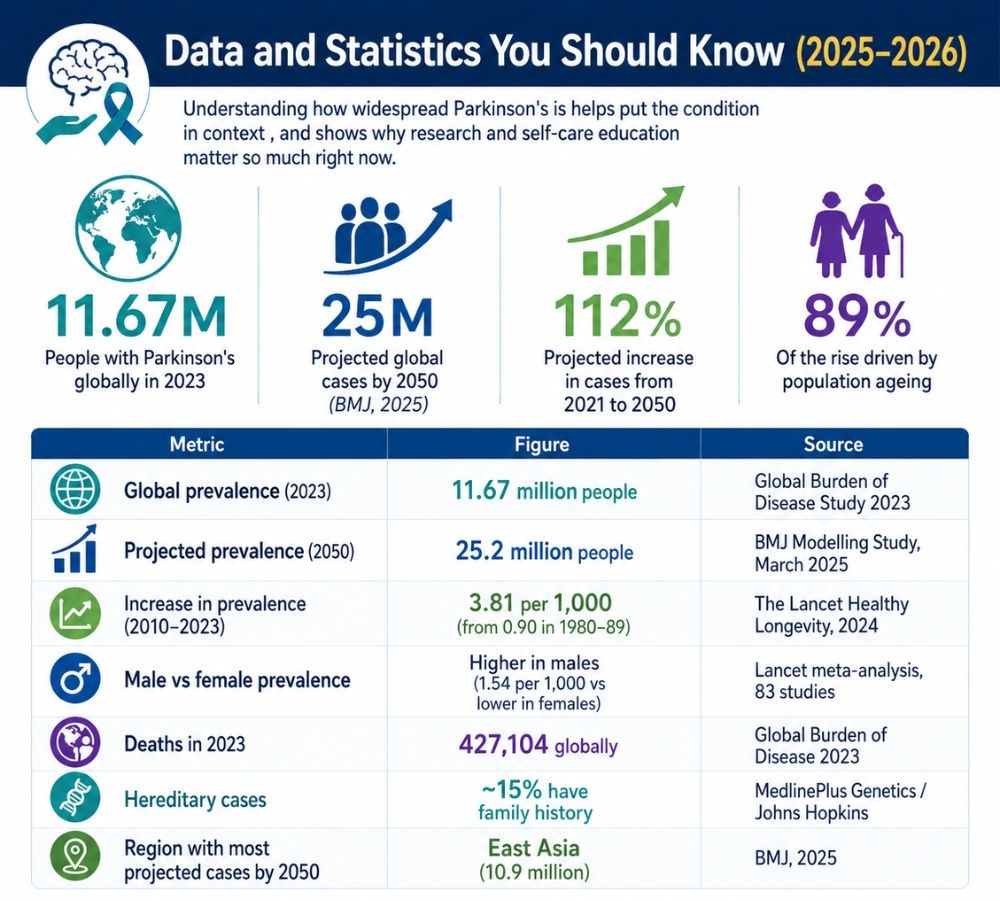
Sources: The Lancet Healthy Longevity (2024) | BMJ Group (2025) | Our World in Data / IHME 2025
Pulling It Together
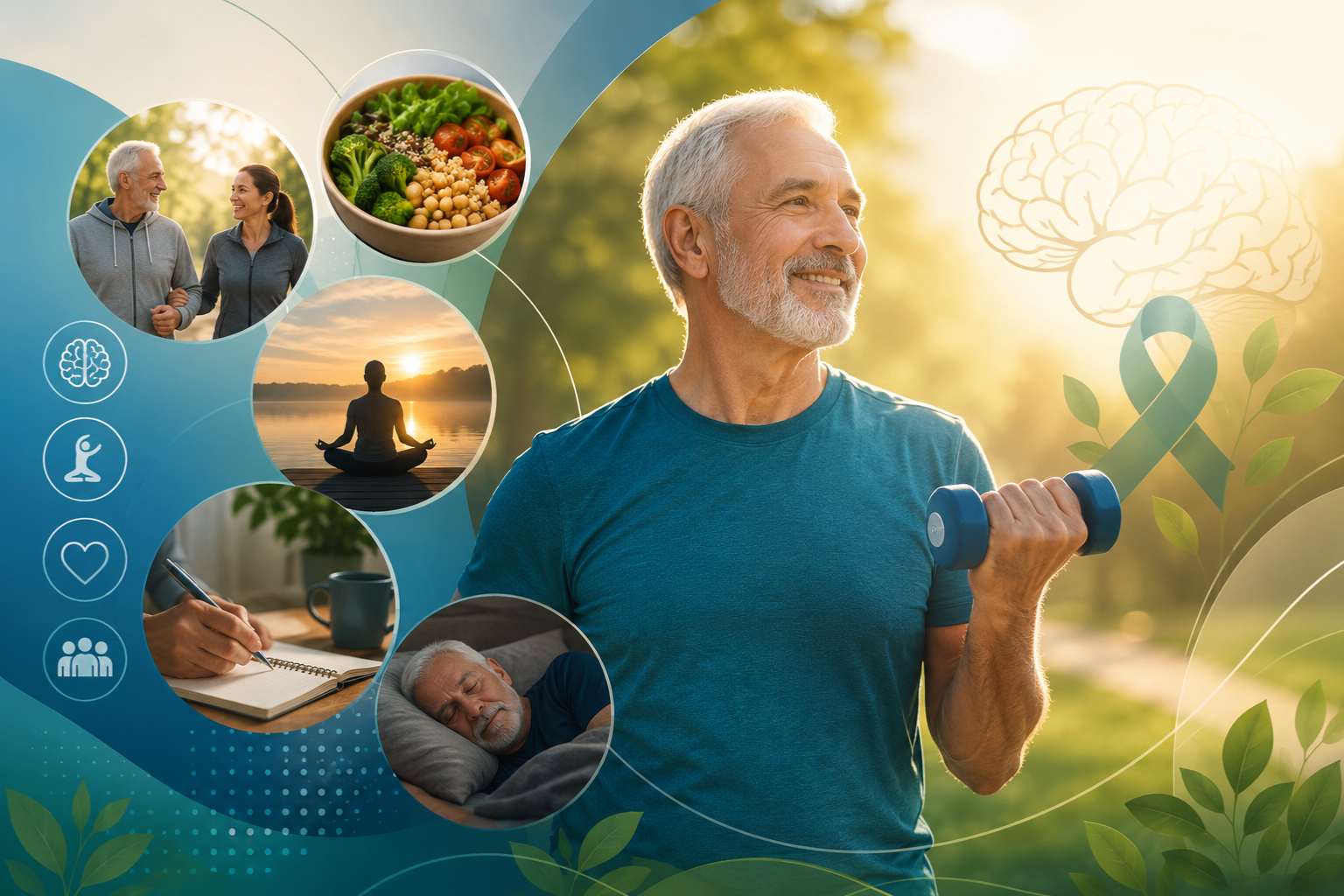
Parkinson’s disease is not a simple condition. It changes slowly, affects people differently, and requires attention on multiple fronts: movement, nutrition, sleep, mental health, and home safety. No single tip fixes everything.
There is one thing that is similar in all these studies: Those individuals who maintain themselves physically active, eat healthy foods, take their medications on time, and communicate with others are always more content than those who avoid social interactions. The difference is clear and can be achieved.
Building a strong daily routine around Parkinson’s disease self-care does not eliminate the condition. It does change how much the condition controls your day. And for millions of people living with this diagnosis right now, that difference is everything.
Seek the help of a neurologist. Consult a physical therapist. Find an online or nearby support group. Take your medicine. Get moving. It’s not just any advice; these are the big things.
Remember
You are the most important member of your own healthcare team. Professionals advise and prescribe, but you are the one making daily decisions. Those decisions accumulate into your actual quality of life.