
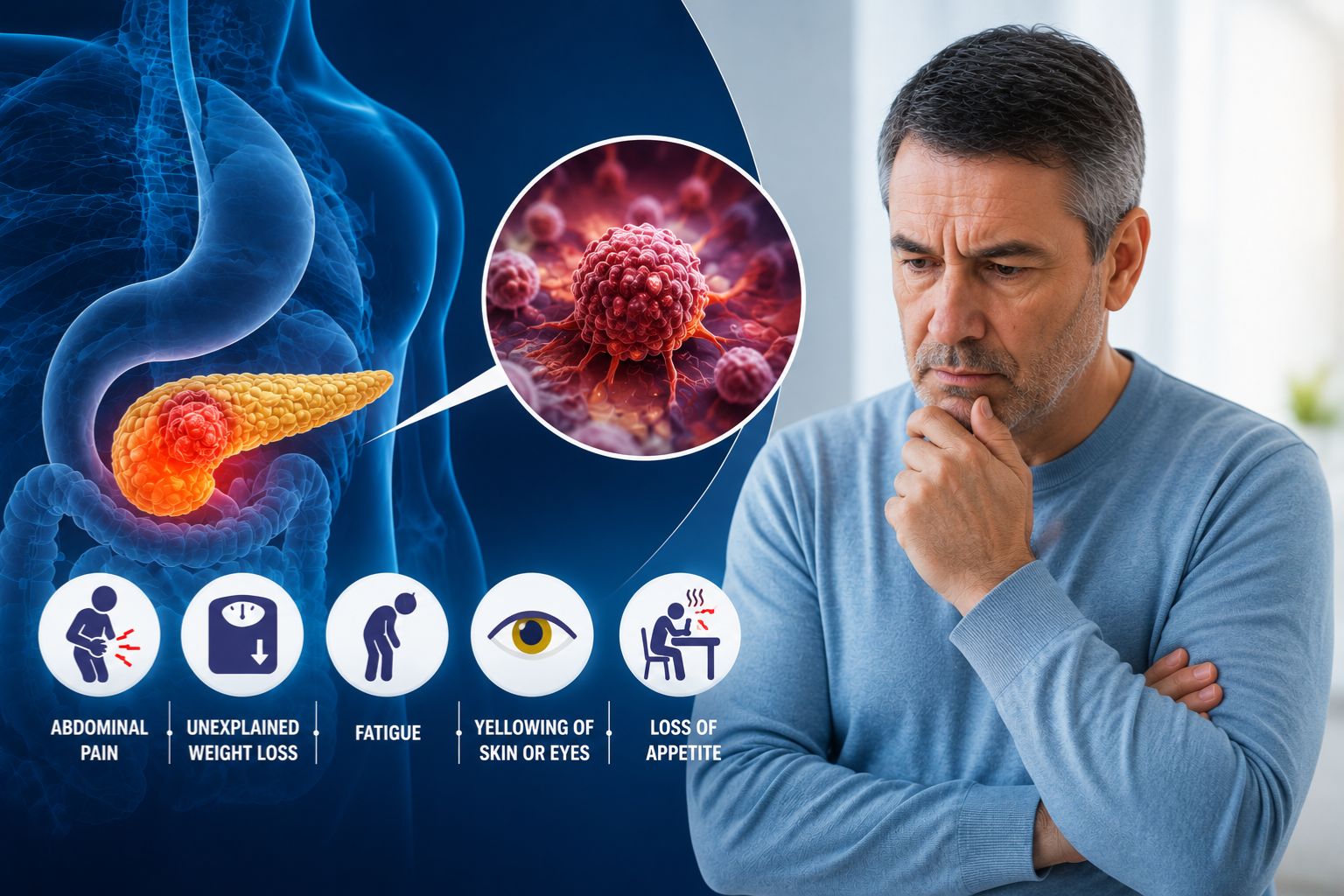
Most people ignore their pancreas major health problems arise. The problem is that pancreatic cancer grows quietly — and by the time it shows clear signs, it has often already spread. Determining the early pancreatic cancer signs will absolutely make a huge difference and help you to treat it at an early stage.
What Are the Early Pancreatic Cancer Signs You Should Never Ignore?
In the early stages, symptoms rarely become apparent. If they occur, they may be innocuous or mistaken for other health issues. That is why it’s so dangerous. People ignore the symptoms and brush them aside as being due to a stomach bug, gas, or stress. Cancer is typically advanced by the time they see a doctor.
The good news? If you know what to look for, you can quickly make a wise decision.
Why Does the Body Not Show Signs Early?
Your pancreas lies in the middle of your abdomen, behind your stomach, and it helps you to digest food and control blood sugar. Pancreatic cancer is often difficult to diagnose at an early stage because, as it grows, it typically doesn’t have symptoms until it reaches a size that impacts the other organs of digestion or metastasizes from the pancreas.
This is not something that is your fault. The body simply does not send loud signals right away. But it does send quiet ones — and that is what you need to watch for.
Digestive Problems That Feel Normal But Are Not
This is where early pancreatic cancer signs often hide in plain sight. These symptoms are thought to be caused by poor food or nervous stress.
Signs and symptoms may include indigestion, diarrhea, nausea, vomiting, if the bile is not able to reach the intestines. You may also notice:
- Floats, oily, or pale-looking stools
- If the bloating does not subside.
- Feeling full very quickly, even after a small meal
About 25% of patients have symptoms related to upper abdominal issues up to six months before diagnosis. These symptoms are often wrongly blamed on conditions like irritable bowel syndrome.
If your digestion feels off for more than a few weeks, do not ignore it.
That Persistent Pain In Your Back or Belly
One of the most common signs is pain, which is overlooked.
The most frequent symptoms of pancreatic cancer are pain in your back or abdomen, weight loss, and jaundice. Often, back and abdominal pain may result in a patient perceiving the pain as being around the middle.
This pain may get worse after eating or when you lie down. It can appear and disappear – easy to ignore. If you have ongoing belly or back pain that has no clear reason, please speak to a doctor.
Skin and Eye Changes That Feel Strange
The change in skin and eye conditions that don’t feel right.
Jaundice is one of the more obvious symptoms of pancreatic cancer. When your skin or the whites of your eyes are yellow, this is when. Cancer Tumors that begin in the head of the pancreas are close to the common bile duct. You will have symptoms if the duct gets blocked.
Along with yellow skin, you may also notice:
- Dark yellow or brown urine
- Pale or whitish stools
- Itchy skin with no clear reason
Itchy skin was what prompted one patient to contact their doctor — and it led to an early diagnosis. Never ignore skin changes that appear without any obvious cause.
Sudden Weight Loss and Feeling Tired All the Time
To some people, being unfit to lose weight is a good thing. Any sudden weight loss is a warning sign.
The presence of a pancreatic tumor can lead to not eating or a fullness sensation, which can result in weight loss. Very tiredness or weakness is also a common and early sign of pancreatic cancer.
This type of fatigue is not the same as after a long day. It is a severe, persistent, non-remitting fatigue.
If you are losing weight fast and feeling drained without any clear reason, take it seriously.
The Surprising Link Between Blood Sugar and Pancreatic Health
This one surprises many people. A rapid diagnosis of diabetes in individuals 50 years or older could be one of the first signs of pancreatic cancer, according to research, particularly if the individual has been suffering from persistent weight loss and is not related to diabetes.
Elevated levels of blood sugar or diabetes due to the destruction of the cells that produce insulin by pancreatic cancer. (Reference: Pancreatic Cancer Action Network) In case you (or somebody very dear to you) has just been diagnosed with diabetes for the first time and there isn’t any history of diabetes among your family members, then you may need to talk to your doctor
Are You or Someone You Love at Higher Risk?
Some individuals are more susceptible to getting pancreatic cancer. Factors which may increase the risk are:
- Age: Most cases are in those over 60 years of age.
- Smoking: If you have been a smoker, it is vital to be aware of these symptoms and seek assessment.
- Genetic factors: A family history of pancreatic cancer in a first-degree relative.
- Chronic pancreatitis: Chronic pancreatitis, like the acute variant, is also a chronic type of the disease.
- Obesity: Extra weight means a greater risk.
If you are at risk, you may not develop cancer. It does, however, imply that you need to listen to your body more.
When Should You See a Doctor?
A few things to be watchful for are jaundice, unexplained weight loss, new onset diabetes, and chronic stomach pain that refuses to go away. These symptoms are usually not cancer-related, except when they are. After all, don’t wait until the symptoms get worse. If you have two or more of the symptoms mentioned in this blog — especially if they last more than two to three weeks — book an appointment with your doctor.
Tell your doctor everything. Mention the pain, the digestion changes, and the tiredness. Nothing is too small to share.
Conclusion
Your body gives you some indications every day; the only thing you have to do is to look for those indications. Spotting early pancreatic cancer signs is not easy — but it is possible when you know what to look for. These are all signals your body is sending you that it needs assistance. These are all indications that your body is making to ask for support. Acting on early pancreatic cancer signs could be the most important step you take for your health. Do not brush things off. Do not wait. Talk to your doctor, ask questions, and push for answers. Early action gives you the best chance at better outcomes — and that is always worth it.
Disclaimer:
This article is strictly for informational purposes only and does not serve as a substitute for professional medical advice, diagnosis or treatment. This article does not serve as a substitute for professional medical advice.If you experience any of the above symptoms, or if you have concerns about your health, contact a professional healthcare provider or licensed doctor right away. But, please do not delay going to the doctor because of something you have read on the web.
That can refer to a variety of individual manifestations. This demand can only be assessed by a doctor who is able to take appropriate examinations and get the tests needed to determine an accurate diagnosis.