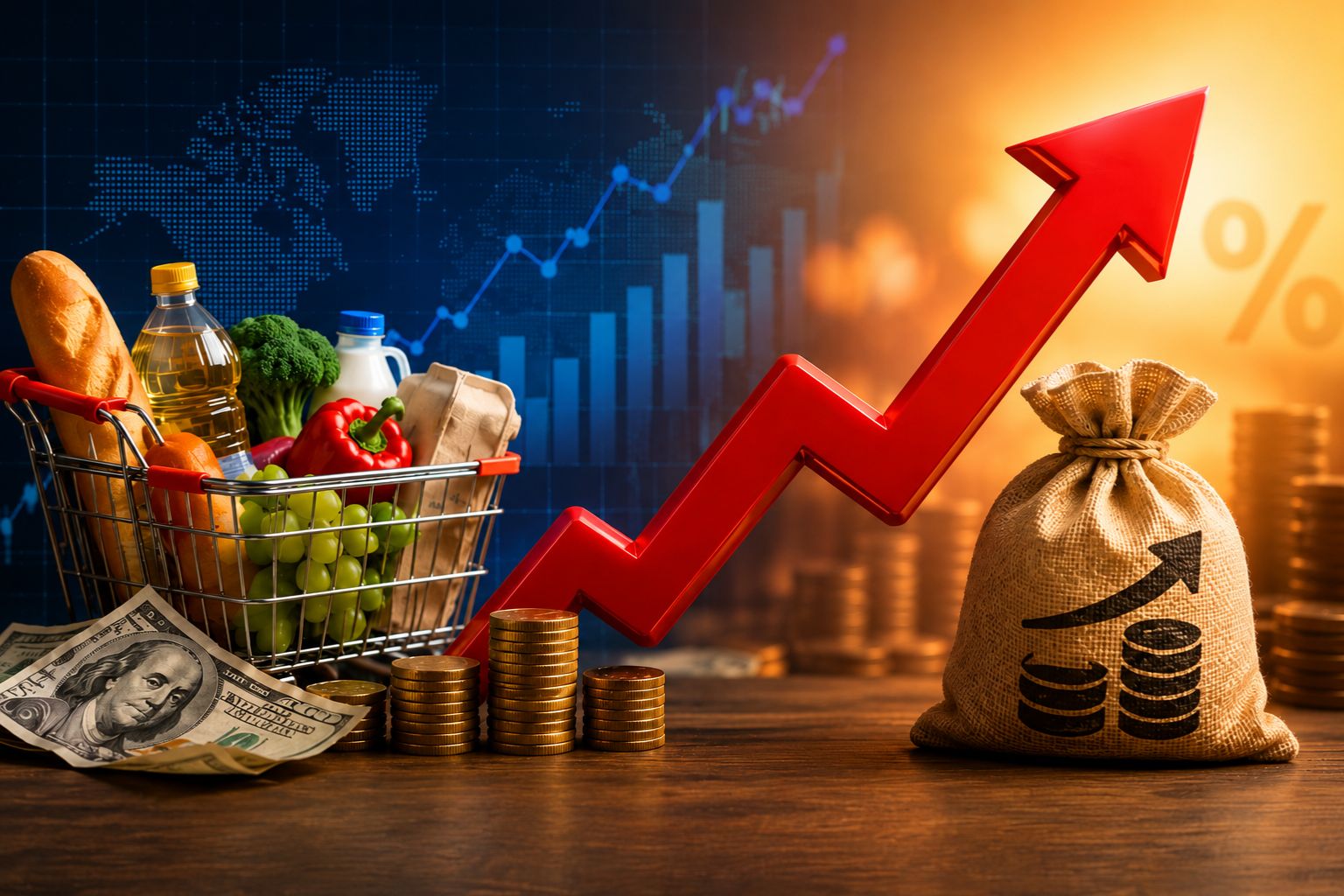
Prices keep climbing. Your cart feels lighter but costs more. Many Americans are asking the same question right now — what is really happening with the inflation rate 2026?
What Is the Inflation Rate 2026?
Let’s start simple. Inflation is the condition whereby one dollar is not as valuable as it was before. Inflation increases, and the same items, such as groceries, gas, rent, are more expensive than they were a year ago.
Economists, families, and even small business owners are paying close attention to the inflation rate 2026 in the United States. The Consumer Price Index (CPI) is a measure of the US BLS that tracks the change in prices over time. Early 2026 inflation has been easing in some regions but is remaining log-jammed in housing and food services.
A 1% or 2% increase in inflation represents hundreds of dollars out of your pocket each and every month. That is real money. And for most American families, it adds up fast.
How Inflation Hits American Households
You probably already feel this without even looking at the data.
You go to the grocery store and notice eggs cost more. Your gas bill crept up again. Your landlord sent a rent increase notice. These are not random events — they are all connected to inflation.
In big US cities like Chicago, Houston, and Phoenix, rent has stayed stubbornly high. Many renters are now spending over 30% of their monthly income just on housing. Financial experts say anything above that number puts a household under real financial stress.
Wages have gone up for some workers — but here is the honest truth. Many Americans are not getting the raise they deserve with the rise in prices. Even if you received a raise this year, you may feel like you aren’t being paid enough. It’s a realistic attitude and one that’s supported by the statistics.
What’s Driving the Inflation Rate 2026 in the US?
It is important to understand that there isn’t just one reason for the price spike. Many different factors are occurring simultaneously in the American economy that are raising the inflation rate in 2026.
Interest rates: The Federal Reserve increases interest rates to control inflation rate 2026. If the interest rate on loans is higher than the price of goods sold, then the spending of consumers decreases. But it also makes it more difficult for average Americans to manage their mortgages, auto loans, and credit card debts.
Government Spending: More dollars chasing the same amount of goods. When the government spends more, it’s spending more dollars, which pushes prices higher. Ongoing budget discussions in Washington continue to play a role in how inflation rate 2026 behaves.
Energy Costs and Tariffs: All things cost more when oil prices increase — almost all products you purchase need to be transported somewhere. In 2026, new tariff policies have also increased the price of imported products, affecting the price for both businesses and consumers.
How It Affects Your Savings and Retirement
Here is something that often gets overlooked — and it matters a lot.
If your savings account is earning 1% interest but inflation is running at 3%, you are quietly losing money every year. Not in your account balance — but in real purchasing power. What $10,000 could buy last year, it cannot fully buy today.
For Americans with a 401(k) or IRA, this is worth paying attention to. If your investments aren’t keeping up with the inflation rate 2026, then the future value of your retirement savings is slowly eroded.
There is an annual cost-of-living adjustment (COLA) for Social Security. But many retirees find that adjustment does not fully cover what they actually spend more on — especially healthcare and groceries.
The good news? Don’t be afraid. All you have to do is be aware. Consulting a financial advisor and exploring alternative investment choices, such as Treasury Inflation-Protected Securities (TIPS) or diversified funds, can help to ensure that your money is working harder.
Smart Budget Tips for American Families
You do not need a finance degree to handle inflation better. The following are simple facts that do assist.
Make shopping lists: Before going shopping, create a shopping list and follow it. Purchasing store brands can save between $30 to $50 on each shopping trip without compromising the quality.
Lower your energy expenses: Small changes like using a programmable thermostat, replacing incandescent light bulbs with LEDs, and turning off appliances that are not being used can have a major impact on your energy bill.
Check your subscriptions: Go through your bank statement and look for recurring charges. The vast majority of Americans have paid for, and are paying for, two or three services that they use very little of. By canceling them, you may be able to save $40 to $80 each month.
Create a small Emergency Fund: Saving a whopping $25 every week equals $1,300 a year. This cushion will ensure that you don’t need to turn to a higher-interest credit card if something comes up unexpectedly.
These aren’t seismic shifts. They do make a big difference when prices remain high, but they must be done consistently.
What Economists Say About Inflation Ahead
Economists do not all agree — and that is actually important to know.
But some think that the Fed’s measured policy will help to slowly tame inflation as the year goes on. There are other concerns, such as high prices that may persist for longer than expected due to energy market fluctuation and continued uncertainty in the global economy.
The International Monetary Fund (IMF) has noted that inflation has slowed across the world but has done so at differen
t rates. For the US, housing costs and the services sector remain the two biggest pressure points.
This much is agreed by all experts — knowledge and flexibility is the trickiest for any American to play right now. Economics can change, and sometimes rapidly, and it’s better to be ready than caught off guard.
Conclusion
Inflation is not just a headline. It is your grocery bill, your gas tank, your rent check, and your retirement account all rolled into one very real daily experience. Understanding the inflation rate 2026 and why will help you become less overwhelmed and more ready.
You don’t have to know everything! All you have to do is take little steps, savvy steps — budget your way, guard your bank accounts, and watch your surroundings. The economy will continue to change. However, with the correct information, you can continue to proceed with confidence.